
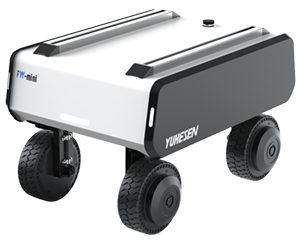
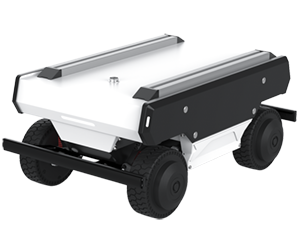
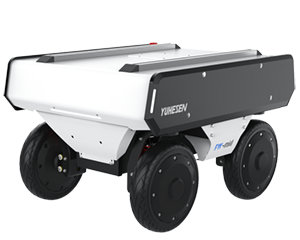
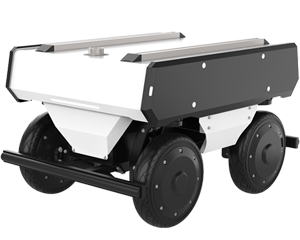
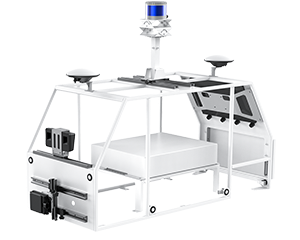

How to Choose a Chassis for Embodied Intelligence Robots? A Scenario-Based Selection Guide to Four Mainstream Architectures
Mobile Robot Chassis Selection Guide: Four Mainstream Architectures Compared, with Scenario-Based Decision-Making
If you are selecting a chassis for a mobile robot project and have gone through plenty of chassis documentation and manufacturers' selection guides, you have probably found that some are stacks of kinematic formulas and overly academic, while others are generic product catalogs. What the market truly lacks is a practical guide written from the user's perspective — one that clearly explains "which architecture fits my scenario, why it fits, and what pitfalls each technical solution has." This article lays out the selection techniques clearly for you.
1. Chassis Selection Starts with Operating Conditions
A mobile robot chassis is not a simple pile-up of motors, wheels, batteries, and other hardware — it is the locomotion subsystem of the entire embodied intelligence system, and this subsystem must be capable enough to support the body in completing its tasks. A wrong chassis selection can, at best, extend the integration and debugging cycle of the whole system by 3–6 months; at worst, it can force the entire system to be scrapped — with selection, design, and integration having to start all over again — wasting time and resources. So before purchasing a robot chassis, we can first lay out a boundary-question framework that enables fast decision-making:
Question 1: On what kind of surface will your embodied intelligence robot mainly operate? Indoor? Paved roads? Unpaved terrain? Or a mix of these?
Question 2: How much payload capacity do you need? The "total system weight" — including the enclosure, sensors, battery, and superstructure mechanisms — is usually 20%–40% higher than an intuitive estimate (because the superstructure sensor system comes with supporting power supplies, wiring harnesses, sensor mounts, and other accessories).
Question 3: How wide is the operating space? Do you need a small turning radius or in-place turning?
💡 Selection tip: At the project initiation stage, include the chassis's failure-free operating time, after-sales support model, completeness of the technical agreement, and the supplier's years in business in your evaluation checklist — this avoids the risk of starting over due to supplier reliability or business continuity issues. Many integrators only discover during prototype finalization testing that the chassis's failure-free runtime and the supplier's after-sales capability are insufficient, forcing them to invest extra in mechanical modifications or find a new supplier — driving up both development cost and development time.
2. Four Types of Mobile Robot Chassis: Technical Characteristics and Scenario Matching
Today's modular mobile robot platforms fall into two main categories — wheeled and tracked — subdivided into four mainstream architectures. Below, we break them down one by one across four dimensions: technical principle, typical parameters, applicable scenarios, and selection guidelines.
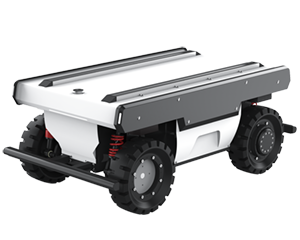
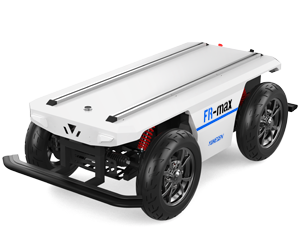
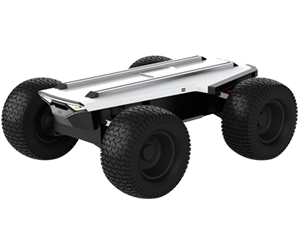
2.1 Ackermann Steering Chassis — The First Choice for Heavy Loads on Paved Roads
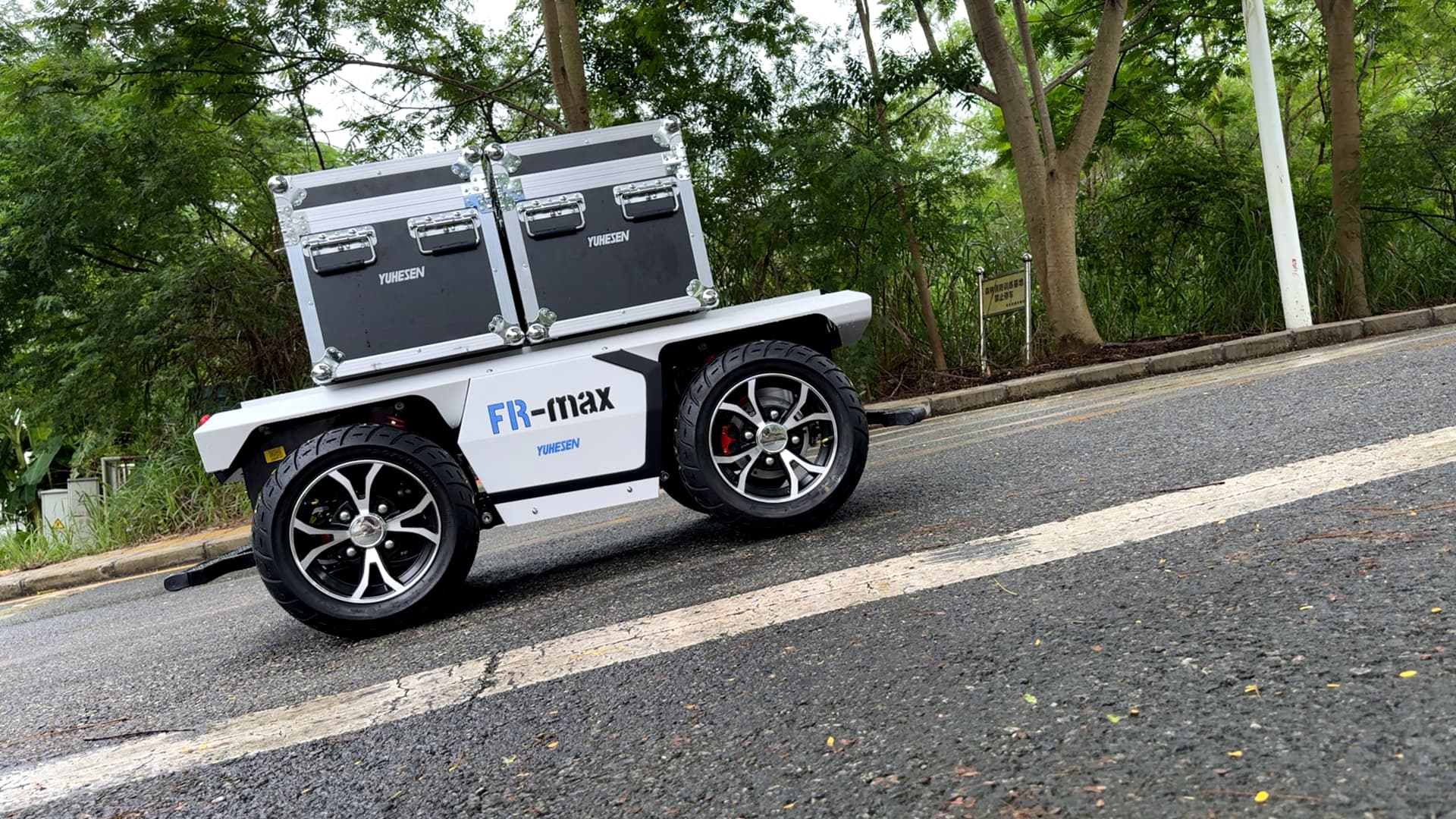
1) Technical principle: a mature steering architecture originating from automotive engineering. The front wheels achieve a geometric difference between the left and right steering angles through a steering trapezoid linkage, ensuring that all wheels roll purely around a single instantaneous center during cornering — significantly reducing tire wear and sideslip. The rear axle is driven by a differential, providing stable straight-line performance and high transmission efficiency.
2) Advantages: few core components (the chassis's core motion components total just three motors — steering, traction, and brake), low failure risk, stable and reliable operation built on mature automotive-grade component standards, low O&M cost, and high payload capacity.
3) Parameter profile:
Payload range: 200–600 kg
Terrain: paved roads (concrete, asphalt, pavers) and unpaved surfaces (dirt roads, fields, agricultural parks)
Turning: has a minimum turning radius; cannot turn in place
Control complexity: ★★☆ (low — mature kinematic model)
Terrain: paved roads (concrete, asphalt, pavers) and unpaved surfaces (dirt roads, fields, agricultural parks)
4) Typical applications:
Campus logistics and distribution — payload 200–600 kg; stable straight-line driving, ideal for long-distance material transport over 1 km+;
Campus smart security patrol — payload 100–300 kg; low center of gravity with excellent high-speed cruising stability;
Campus embodied intelligence compound operations — payload 150–400 kg; long-endurance operation on paved roads with low maintenance cost;
⚠️ Selection note: if a campus scenario contains many narrow aisles or requires frequent end-point U-turns, the Ackermann chassis's minimum turning radius may become a bottleneck. In that case, evaluate the 4WD-4WS solution.
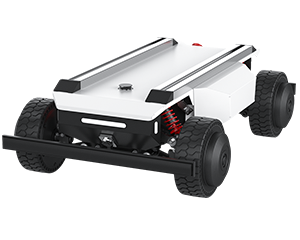
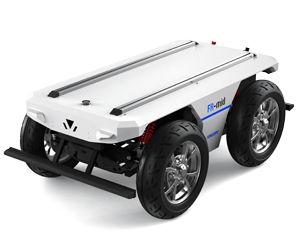
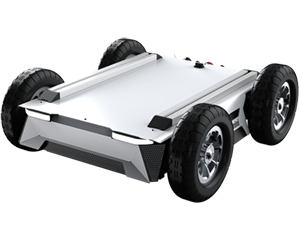
2.2 Omnidirectional 4WD-4WS Chassis (4WS + 4WD) — The All-Round Solution for Tight Spaces and Mixed Terrain
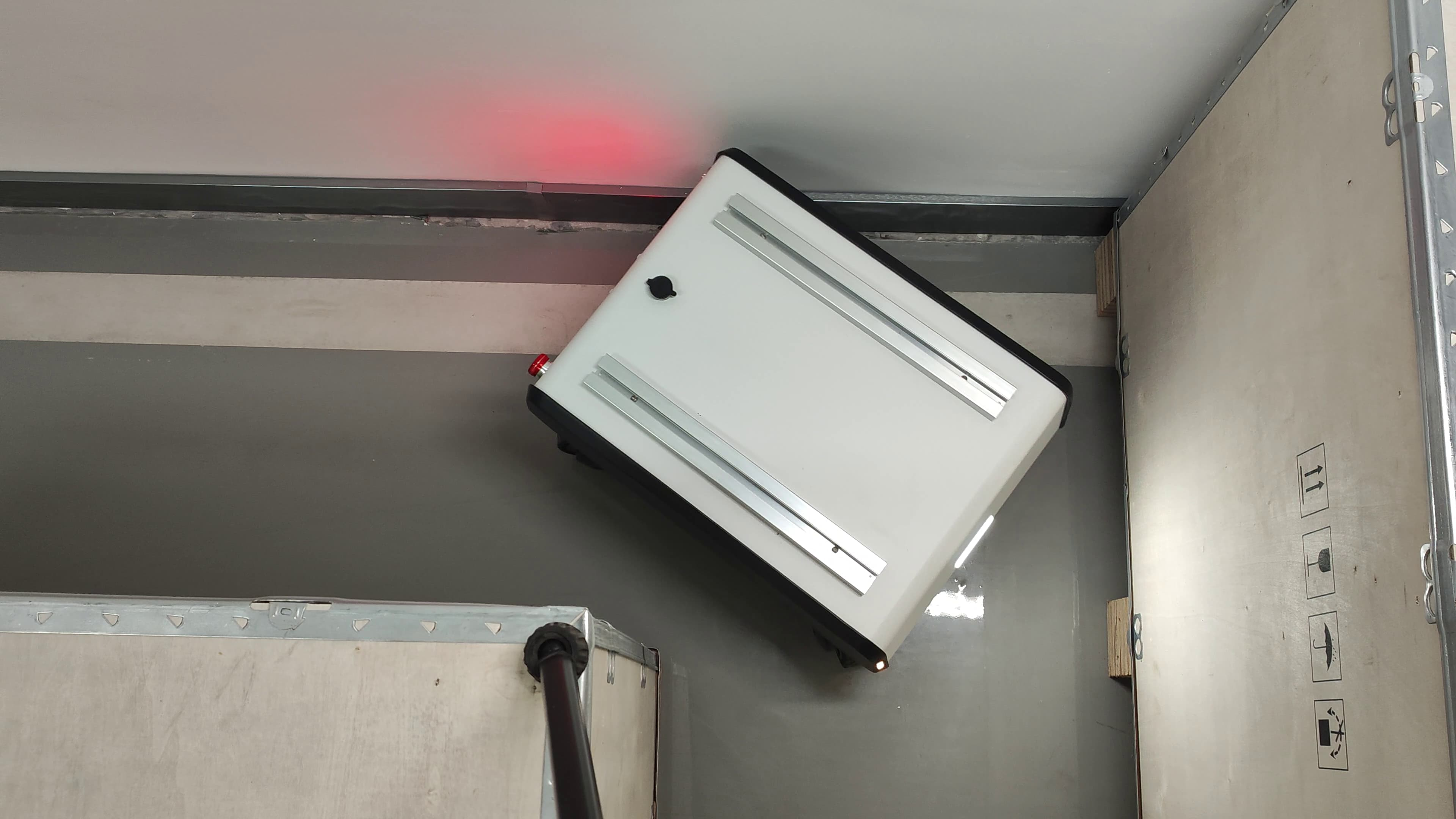
1) Technical principle: four-wheel independent steering plus four-wheel independent drive — every wheel has both steering and power output capability. Four motion modes are supported: Ackermann mode (high-speed cruising), diagonal/crab mode (Crab Steering, −90° to +90° deflection), in-place turning mode (zero-radius rotation), and X-parking mode (long-duration slope parking without draining the motors).
2) Advantages: high control precision of core components, flexible motion modes, stable and reliable operation built on mature automotive-grade component standards, and low O&M cost. Compared with four-wheel differential chassis, 4WD-4WS replaces sliding friction with rolling friction, greatly reducing tire wear during long-term operation on hard surfaces. Ackermann compliant-curve differential compensation can also be applied, so the vehicle neither bounces nor drifts during steering and maintains better positioning accuracy.
3) Parameter profile:
Payload range: 30–250 kg
Terrain: indoor/outdoor surfaces + paved roads + light off-road on unpaved terrain (gravel, grass, gentle slopes)
Turning: zero-radius in-place turning, omnidirectional movement
Control complexity: ★★☆ (low — mature kinematic model)
4) Typical applications:
Indoor-outdoor transitional logistics — payload 50–250 kg; plant-to-yard transition zones, mixed paved and light unpaved surfaces;
Narrow-aisle security patrol — payload 30–60 kg; diagonal mode passes through extremely narrow aisles with omnidirectional maneuvering and no blind spots;
Embodied intelligence / VLA R&D platform — payload 40–250 kg; omnidirectional mobility provides maximum flexibility for algorithm validation;
⚠️ Selection note: if a campus scenario consists mostly of open roads with rare turning or U-turn operations, weigh the cost of 4WD-4WS — because it uses more motors than an Ackermann chassis, later O&M cost may become the bottleneck. In that case, evaluate the Ackermann solution.
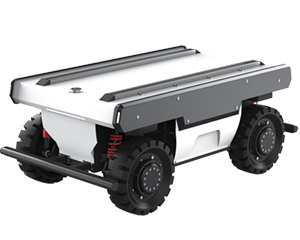
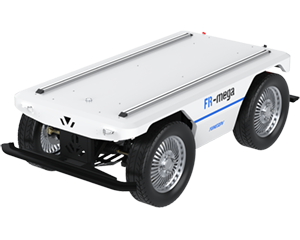
2.3 Differential-Drive Wheeled Chassis (Differential Drive) — The Cost-Effective Choice for General Indoor/Outdoor Use
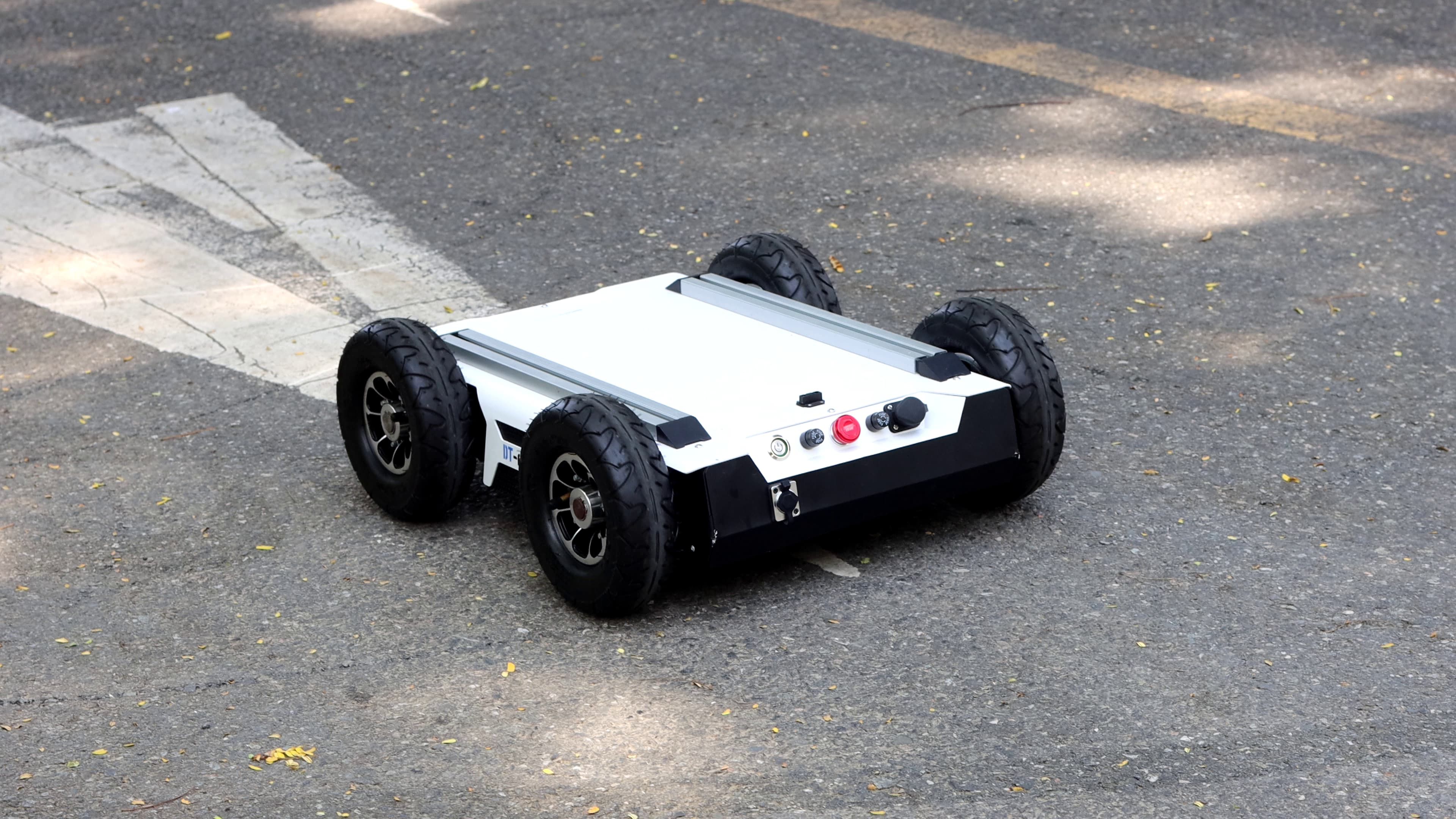
1) Technical principle: steering is achieved through the speed difference between the left and right drive wheels, with passive wheels (casters) providing support. The kinematic model is simple and the control algorithms are extremely mature, making it the most widely deployed chassis architecture for purely indoor mobile robots.
2) Advantages: low application, O&M, and usage costs in indoor scenarios with no obstacle-crossing requirements.
3) Parameter profile:
Payload range: 5–500 kg
Terrain: indoor finished floors (hotels, restaurants, schools, warehouses)
Turning: can rotate in place, but has no lateral translation capability
Control complexity: ★☆☆ (low)
4) Typical applications:
Hotel meal delivery / distribution — payload 10–50 kg; simple structure, significant cost advantage for fleet deployment;
Disinfection robots — payload 20–60 kg; stable operation on indoor finished floors, control precision meets navigation needs;
Teaching and research platforms — payload 5–30 kg; the most complete ROS/ROS2 ecosystem, fastest to get started with;
Warehouse logistics AGVs — payload 100–500 kg; the classic solution for standardized routes and large-scale deployment;
⚠️ Selection note: differential chassis lose noticeable mobility on outdoor roads, unpaved surfaces, or steep slopes. Prolonged in-place turning accelerates tire wear, and the vehicle bounces and drifts during steering, degrading positioning accuracy; meanwhile, diagonal differential steering of the motors causes gear reducer life to drop rapidly. Evaluate ground conditions, application scenarios, and duty cycles comprehensively when selecting.
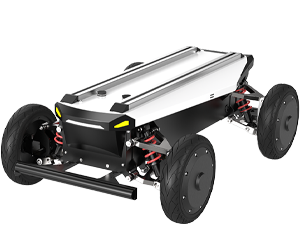
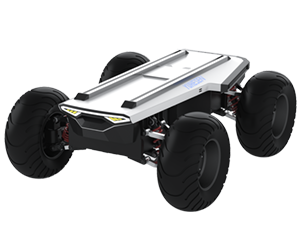
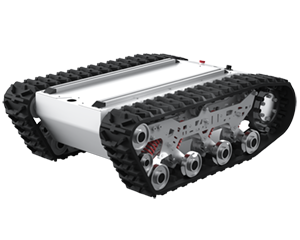
2.4 Tracked Differential Chassis (Tracked Chassis) — The Only Choice for Special and Complex Terrain

1) Technical principle: rubber or steel tracks replace tires, with differential drive of the left and right tracks providing propulsion and steering. The large ground contact area yields ground contact pressure far below wheeled solutions, delivering mobility on soft, muddy, sandy, and other unstructured terrain that wheeled chassis cannot replace.
2) Advantages: excellent mobility on unpaved roads and in agricultural scenarios, with strong obstacle-crossing and climbing capability.
3) Parameter profile:
Payload range: 10–100 kg
Terrain: sand, mud, snow, rubble, steep slopes (up to 30°+)
Turning: differential steering; in-place turning possible on soft ground
Control complexity: ★★☆
4) Typical applications:
Agricultural plant protection / orchard operations — payload 50–300 kg; strong mobility on soft soil, low ground contact pressure protects soil structure;
Fire reconnaissance and emergency rescue — payload 30–200 kg; traverses composite terrain of rubble, standing water, and ash where wheeled solutions cannot operate;
Military reconnaissance / EOD — payload 20–150 kg ;extreme off-road mobility, obstacle-crossing height 2–3× that of wheeled chassis;
Field exploration and pipeline inspection — payload 50–200 kg; long-distance autonomous travel on unstructured terrain;
💡 Selection tip: tracked chassis consume 30%–50% more energy than wheeled ones, and the track tensioning mechanism and road wheels require regular maintenance. Given the higher operating and maintenance cost, always confirm whether the supplier offers a quick track-replacement design and what the spare-parts supply cycle is.
3. At a Glance: Core Metrics Comparison of the Four Chassis Types
The comparison table below covers the key evaluation dimensions in procurement decisions, for quick side-by-side comparison:
| Evaluation Dimension | Ackermann | 4WD-4WS | Differential-Drive Wheeled | Tracked |
|---|---|---|---|---|
| Max Payload | 200–600 kg+ | 30–250 kg | 5–50 kg | 10–100 kg |
| Steering Agility | Requires a certain turning radius | Zero-radius omnidirectional movement | Differential steering | Differential steering |
| Terrain Adaptability | Indoor/outdoor and paved surfaces | Indoor/outdoor and paved surfaces | Indoor/outdoor and paved surfaces | Sand, mud, snow, rubble, steep slopes (30°+) |
| O&M Cost | Low | Low | High | Medium |
| Typical Industries | Embodied intelligence compound operations, logistics & security, cleaning & mobility | Embodied intelligence compound operations, logistics & security, cleaning & mobility | Embodied intelligence compound operations, indoor meal delivery & disinfection, education & warehousing | Embodied intelligence compound operations, agriculture & firefighting, military & exploration |
4. Scenario-Based Decision Path: Lock In the Optimal Chassis in Three Steps
If you have already defined your basic operating conditions, the following decision tree quickly narrows the options down to one or two candidates:
Step 1 — Determine the ground type:
Indoor floors (tile, epoxy flooring) → wheeled solutions (Ackermann / differential / 4WD-4WS all work)
Indoor-outdoor mixed transitions → 4WD-4WS / Ackermann (balancing agility and mobility)
Paved roads (concrete / asphalt / pavers) → wheeled solutions (Ackermann / 4WD-4WS)
Unpaved terrain (sand / mud / grass / rubble) → tracked / Ackermann / 4WD-4WS (light off-road)
Step 2 — Confirm payload requirements:
≤ 80 kg → (paved surfaces) all four types work; prioritize Ackermann or 4WD-4WS (best agility, lowest O&M cost)
80–600 kg → (paved surfaces) Ackermann / 4WD-4WS
≥ 600 kg → (paved surfaces) Ackermann chassis
100 kg → (unpaved surfaces) tracked chassis
Step 3 — Evaluate space constraints:
Narrow aisles / frequent U-turns → 4WD-4WS (zero-radius turning)
Open roads / long straight distances → Ackermann (best high-speed stability)
Extremely tight spaces + precision docking → 4WD-4WS (diagonal / lateral modes)
Complex environments + off-road conditions → tracked chassis (differential mode)
YUHESEN focuses on the R&D and manufacturing of modular mobile robot chassis, offering a full range of 4WD-4WS, Ackermann, tracked, differential, explosion-proof, and medical chassis (10–600 kg), with supporting ROS2 / Apollo / embodied intelligence navigation solutions — empowering the logistics, security, chemical, and medical industries. To learn more about robot chassis technology or to request a customized solution, please contact the YUHESEN technical team.


